

 prawn
What Thai shrimp cakes are and where you may see them
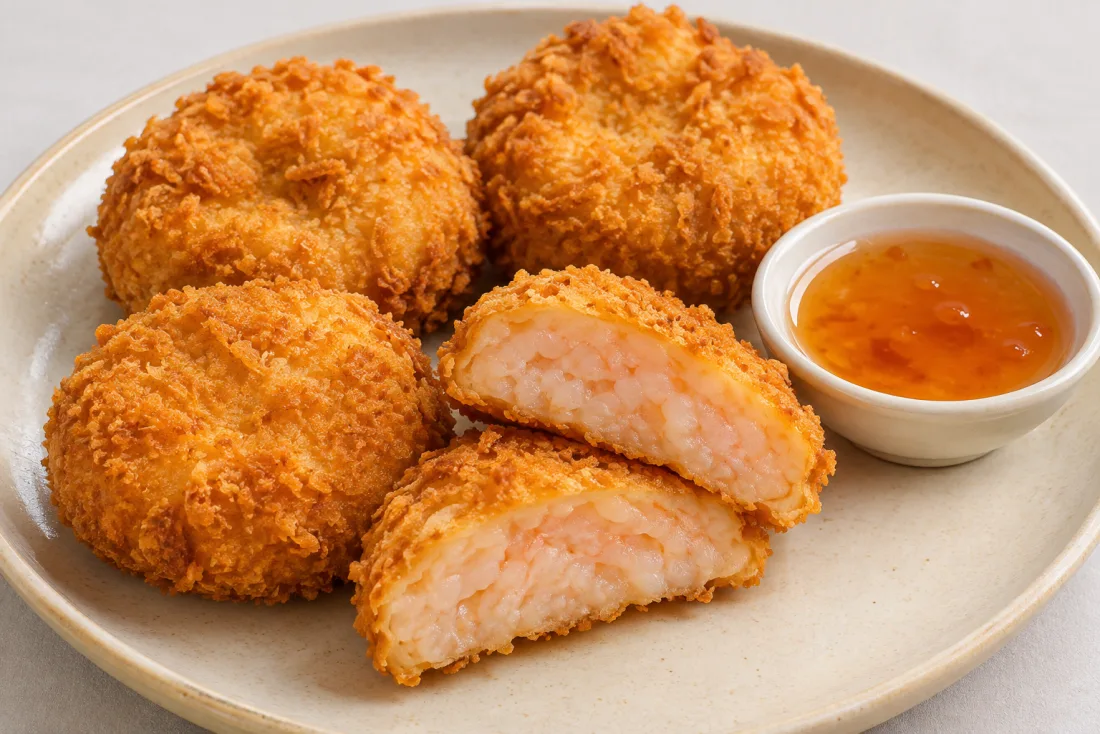
Goong means shrimp. It follows tod man on a Thai menu to identify a small fried cake made with shrimp. The shrimp mixture is shaped into a patty with a springy centre. You may see Tod Mun Goong or Thod Man Kung in English. The Thai spelling helps identify the dish.
A Bangkok riverside restaurant has served shrimp cakes with plum sauce, while Blue Elephant in Phuket lists a version with red pomelo salad among its starters. Both show how the cakes fit different Thai restaurant settings. The menus tell us about how they are served, and leave the place of invention open.
What shrimp, seasonings and breadcrumbs contribute
Peeled shrimp give the centre its mild sweetness, with salt and white pepper bringing it out. Marion Grasby adds finely ground coriander root and garlic to the filling before covering it with coarse panko crumbs. The outside fries into a golden crust while the centre remains smooth.
Penn State’s WPSU World Kitchen keeps the shrimp coarsely chopped and binds the mixture with a little flour, then uses panko as well. Both preparations let shrimp remain the main flavour. Garlic and coriander root are seasonings in the first recipe, and flour helps make the patties hold together in the second.
How the centre becomes springy and the coating crisp
Chopped or ground shrimp become a little sticky as they are mixed. The cook can spoon out portions and flatten them into patties of similar thickness. Finely ground shrimp produce a smooth springiness, while visible pieces give a coarser bite. Pressing breadcrumbs onto the outside forms a textured shell.
The outside sets and browns as moisture escapes in the oil, then the shrimp centre cooks through. The two layers give the cake its contrast. Letting the hot cakes drain briefly keeps the outside crisp. As they sit, steam from the centre can soften the crust.
The flavour of the cakes and their dipping sauces
The breadcrumbs crunch first. Then comes the light sweetness of shrimp and a little salt, with garlic, coriander root or white pepper in the background. White pepper adds a mild warmth. The dipping sauce has a large effect on perceived heat, so try the first bite plain if you want to taste the filling clearly.
Sweet plum sauce has a fruity tang that balances the fried coating. Sweet chilli sauce adds the warmth of chilli. Some restaurants serve the cakes with a tart pomelo salad, which brings citrus fragrance and juice. Keeping the sauce on the side lets everyone dip to taste.
Shrimp cakes, Thai fish cakes and restaurant variations
Tod man pla are Thai fish cakes. A familiar version uses fish, red curry paste and long beans, with a redder colour and a more pronounced spice blend. The shrimp cakes described here are based on shrimp in a crumb coating. Look for the last word in the Thai name or ask about the filling and seasoning.
Shrimp recipes vary as well. One published version adds pork fat, oyster sauce, soy sauce and sesame oil, then coats the cakes with egg and breadcrumbs. Some restaurants make their own mixture and others use prepared cakes. The golden coating gives little information about what else went into the filling.
Shrimp, wheat, egg, fish and shared frying oil
Shrimp is a crustacean shellfish. Ordinary breadcrumbs usually bring wheat into the dish. Some recipes also use flour in the filling or egg to help the crumbs stick. Ask about soy sauce and oyster sauce, which can add soy, wheat or oyster depending on the products used. Some preparations also warrant checking for sesame, fish-based seasoning and pork.
If you need to avoid an allergen, ask about the filling, coating and dip separately. Kitchens can share tongs, fryer baskets and oil between fish cakes, shrimp and other breaded dishes. The kitchen can clarify how it handles the ingredients and the fryer for the serving in front of you.
If you have a food allergy, tell the restaurant before ordering and ask about ingredients, sauces and shared cooking equipment.