

 fish
What the name means and where the dish appears
Pla means fish and tod means to fry. Tod Man Pla, Tod Mun Pla and Thai Fish Cakes are menu names for this kind of fried fish paste. A menu that specifies pla krai is pointing to a preparation made with clown featherback, a fish associated with this dish in Thailand.
The Thailand Foundation includes the cakes in its Thai cookery collection, and Thai SELECT documents a version named for that fish. They also appear in cooking lessons in Chiang Mai. These are concrete examples of Thai cooking and service, rather than evidence for an exact birthplace or a single recipe.
Fish, curry paste and the green ingredients
Fish forms the body of the cake. Pla krai is one Thai example, and some published recipes use other white fish such as tilapia. Fish choice can affect flavour, moisture and springiness. Working the fish into a tacky paste also helps it hold small pieces of vegetables together.
Red curry paste and fish sauce can contribute fragrance, heat and a savoury taste. Finely cut makrut lime leaves add a citrus aroma, and sliced long beans add a little crunch. Some cooks add Thai basil, and other recipes include egg. The colour and visible flecks are clues, rather than a complete ingredient list.
How the outside browns and the centre stays springy
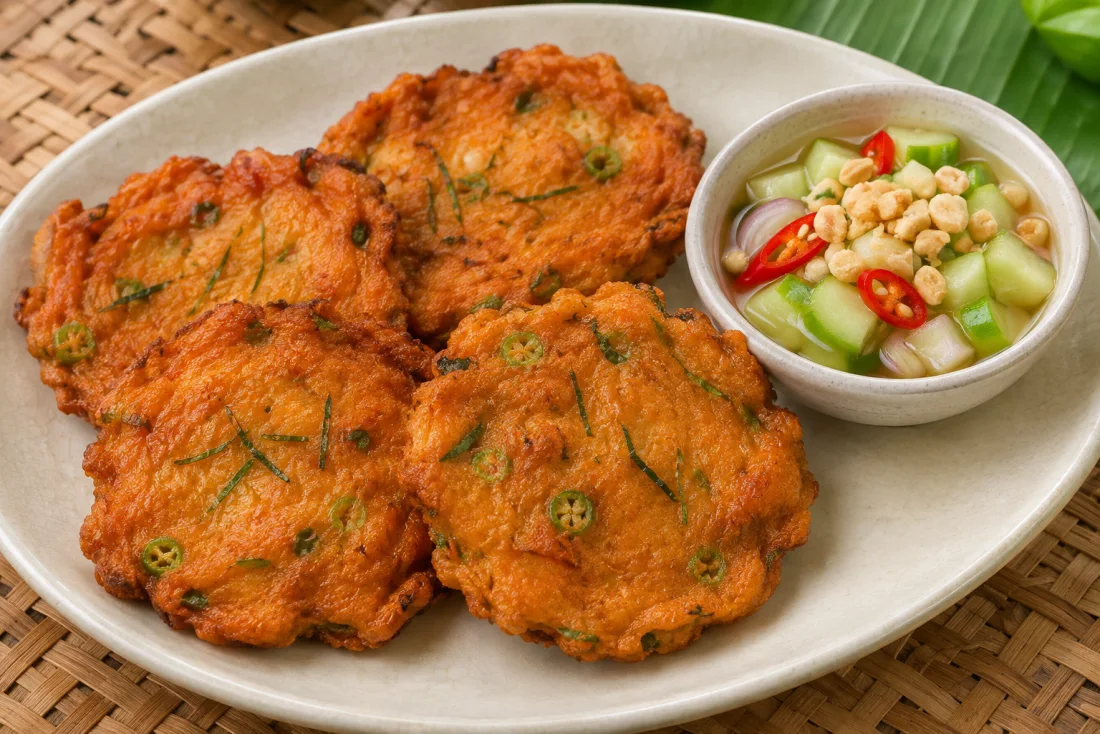
One way to make the cakes is to work fish and seasonings into a sticky paste and then fold in the sliced beans and leaves. The beans stay in small pieces and retain their distinct texture. Blending all the ingredients completely smooth would make those little pieces less noticeable.
Cooks typically shape the paste into small flattened cakes and fry them until set and golden-brown. The surface can be lightly browned while the inside stays springy, without relying on a thick crumb coating. Fish choice, thickness and frying all affect the texture, so compare the centre with the surface when you take a bite.
The flavour and the cucumber dip
Taste the fish cake by itself for the savoury fish and curry paste and the scent of makrut lime. Heat varies with the particular paste and how much was used. Makrut lime leaves mainly perfume the cake. More of the sweet-sour taste generally comes from the separate dip.
The dip may be a sweet chilli sauce with cucumber. Some recipes add vinegar, shallots and chopped peanuts. Fresh cucumber and sweet acidity contrast with the warm cake. Try one bite plain and the next with a little dip. Both the cake and the sauce may contain chilli, so check their heat separately.
How to recognise it on the menu and when it is served
A restaurant can serve several cakes with a dip as a starter or a small plate alongside other dishes. The cakes also lend themselves to small portions at cooked-food stalls. In Thai cooking guides, they illustrate the way fish paste can hold red curry paste and still have a noticeable spring.
A menu may list fish cakes and prawn cakes separately. Pla means fish and kung means prawn. Ask which fish is used, whether the dip is separate and what else comes with the serving. These formats show different ways of serving the dish, not a count of how frequently it is sold or proof of what one kitchen uses.
Allergens in the fish paste, dip and shared oil
Fish is central to the cake and fish sauce can add another fish ingredient. Some recipes contain egg. Some red curry pastes contain shrimp paste, so a cake with no visible prawn may still involve crustaceans. The cucumber sauce may contain chopped peanuts. Ask about the mixture and the dip separately.
Tell the restaurant which fish or other ingredients you must avoid. Ask if the fish paste, curry paste or dip arrives ready-made. Check whether fryers, oil, strainers and preparation tools are shared with prawn cakes or other foods. Removing the dip does not change ingredients already mixed into the cake or address earlier contact.
If you have a food allergy, tell the restaurant before ordering and ask about ingredients, sauces and shared cooking equipment.