

Young leaves from the tips
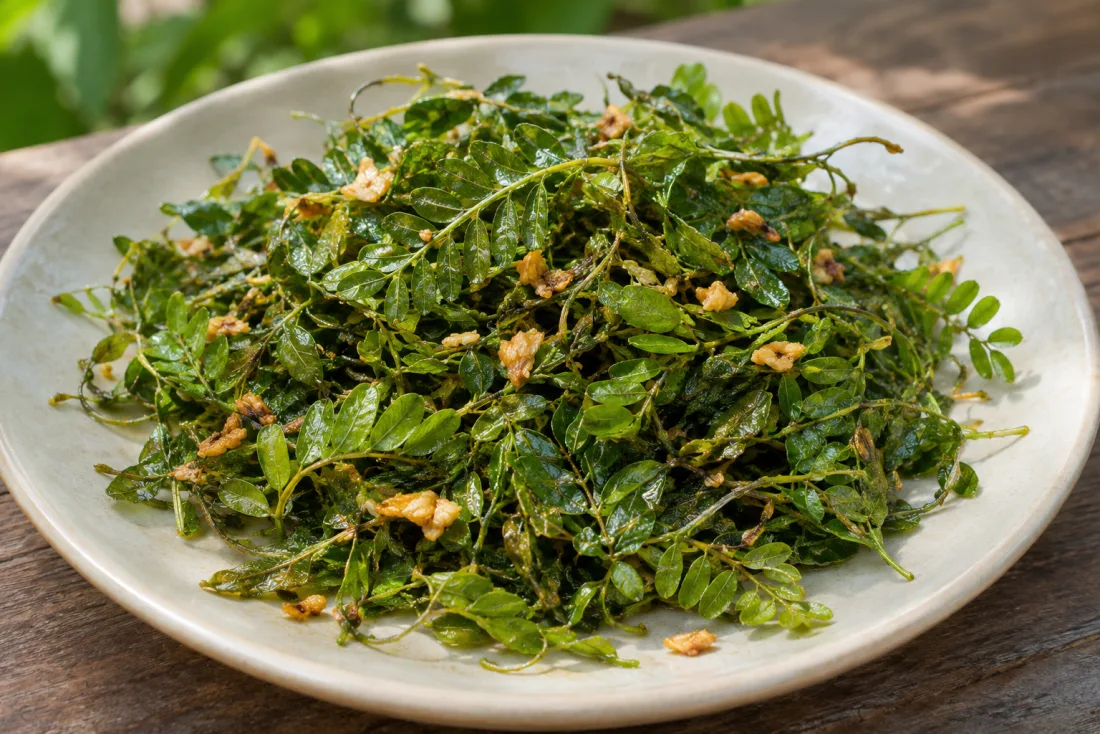
Yot khae refers to young sesbania shoots. This recipe strips the fine leaflets from the stems and uses them instead of the flower or pod. The small green leaves keep some of their shape after frying. Garlic flecks make them easy to distinguish from saucier leafy stir-fries.
A Thai garden ingredient
Thai agricultural references document Sesbania grandiflora grown near paths and ponds, and identify the young shoots as an edible vegetable. A recorded Thai recipe fries the leaves, then tosses them with garlic and soy. The agricultural records do not establish a single place of origin for this preparation.
Leaves, garlic, rice bran oil and soy
The representative recipe uses sesbania leaves, garlic, rice bran oil and soy sauce. A little sugar can round the seasoning. The leaves crisp without a thick batter. The garlic is fried until lightly golden, and the soy is added so it does not soak the leaves.
Fry and drain before tossing
Wash and dry the shoots, remove the tougher stems and fry the leaves. Drain them and fry the garlic separately. Return the leaves for a brief toss and add the soy near the edge of the pan. Serve in a loose pile or with plain rice.
Fragile leaves and toasted garlic
The leaves break lightly and leave a mild leafy flavour. Garlic adds stronger toasted aroma and soy gives a savoury finish. A little sugar can soften the saltiness. Steam or moisture softens the leaves after serving, so the best crunch is soon after cooking.
Soy, wheat and shared fryer allergens
Soy sauce contains soy and can contain wheat. Ask about fish or oyster sauce if extra seasoning is used. A shared fryer or utensils may contact shellfish, wheat batter, sesame or peanuts. If sesbania itself is a concern, confirm the vegetable as well as the preparation.
If you have a food allergy, tell the restaurant before ordering and ask about ingredients, sauces and shared cooking equipment.