

 chicken
 shrimp paste
 fish sauce
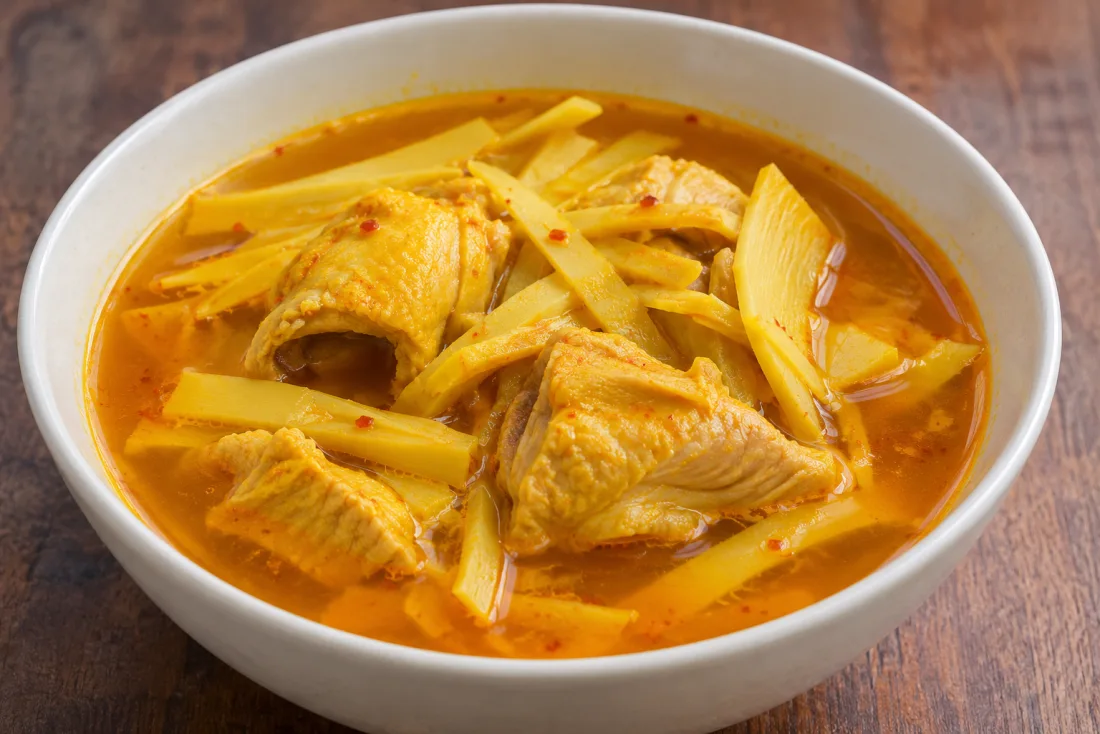
Southern sour curry and its yellow color
Turmeric is used in many southern sour curries, some called gaeng lueang outside the south and gaeng som locally. Fish is common in the family. The featured recipe uses chicken, bamboo shoots, tamarind and fish sauce. Ask about coconut milk when a menu translates different dishes as yellow curry.
Chicken, prepared shoots and turmeric paste
The documented recipe pounds dried chili, coriander seed, galangal, lemongrass, shallot, garlic, turmeric and shrimp paste. Fry the paste briefly with chicken and prepared bamboo shoots, then add a little water, fish sauce and tamarind. Bone-in chicken takes care when serving.
Tart first, fragrant and hot afterward
Tamarind brings fruit acidity, turmeric adds an earthy aroma and chili brings heat. Shoots can stay crisp, and the chicken adds savor to the broth. Other southern recipes use lime or local sour fruits. This specific example is water-based.
Pairing the sour broth with rice
Portion chicken and bamboo before spooning broth over rice. Check for bones when sharing. Ask whether the pot is made ahead and which bamboo shoots are used if the spice or texture matters.
Reading water-based and coconut-based yellow curries
Thai kari yellow curry often has coconut milk, potato and warm spices. Southern yellow sour curry is tangier and lighter. Central sour chicken curry can use red chili paste and tamarind with cabbage or cauliflower. The full name and ingredients distinguish them.
Allergens in shrimp paste, fish sauce and shared oil
The featured recipe contains crustaceans and fish. Other pastes and stocks can contain the same ingredients. Check compound seasonings for soy and wheat and coconut in other yellow curries. Ask about shared utensils and oil; lifting solids out does not remove allergens.
If you have a food allergy, tell the restaurant before ordering and ask about ingredients, sauces and shared cooking equipment.